
Bell Gardens Previous Residents by Era
Era matters in this search. Recorder material starts in 1850/51. Bell Gardens did not incorporate until August 1, 1961. Records from the earlier decades may call the area unincorporated county, a ranch, a precinct, or a neighboring place. Regional directories ran for known years, but the exact Bell Gardens stretch is uncertain, so check each volume before treating it as local proof.
| Source | Years It Covers | Where Held | What It Shows |
|---|---|---|---|
| RR/CC annual index and deeds | 1850/51-present | Norwalk counter, mail, fax, and order path | Grantors, grantees, instruments, legal descriptions |
| Assessor parcel and AIN | Current roll and event history; start unstated | Assessor Portal and Parcel Viewer | Situs, parcel facts, ownership-event clues |
| LAPL digitized directories | Selection from 1875-1987 | Visual Collections online | Names and addresses when a volume includes the area |
| Californiana and local history | Directories dating to the 19th century; census 1850-1910 | Norwalk closed stacks | Local directories, papers, census, and histories |
| Federal census | 1850-1950 open | NARA, FamilySearch, and library databases | Enumerated household at the census date |
| Permits, planning, and aerials | Historical start varies; aerials 2008-2023 and selected 2024/25 | City offices and Assessor map | Work, parcel changes, and visible footprint or use |
Start with the parcel. The Assessor takes an address or an AIN. The Recorder takes no street address, so people-, year-, and household-keyed records carry the rest, with directories, census pages, probate, and obituaries adding context where coverage fits.
Bell Gardens Previous Residents Start With AIN
Enter the current situs address in the Los Angeles County Assessor Portal Basic Search and save the ten-digit AIN, displayed as 1234-567-890, plus use, parcel status, physical traits, and ownership-event clues. Autocomplete can miss. If it fails, switch to Legal Search or Map Search, or click the parcel directly in the Assessor Parcel Viewer instead of guessing at a street label.
A tax record is not an occupancy roll. Situs describes the parcel. The mailing address is the tax destination, and the legal description identifies the land. Public labels may omit owner and mailing names. HOX can suggest owner occupancy without proving anyone lived there.
Bell Gardens Deed Chain for Past Residents
The backward move runs from grantor to earlier grantee. In the newest deed, the seller is the grantor and the buyer was the grantee. Search that earlier name as a possible grantee in an older year. Tie every candidate to one legal description or AIN. A same-name hit stays a lead until land identity and instrument details agree.
Test initials, married names, trusts, trustees, compound surnames, and spelling variants while preserving each printed form. The goal is simple. Build one connected set of instruments for one parcel.
- Start with the AIN, event clue, likely acquisition year, and instrument details.
- At Norwalk, locate the acquisition grantee in that year's alphabetical index.
- Capture grantor, grantee, date, document number, vesting, legal description, and AIN or APN.
- Search each grantor as grantee in an earlier year, testing variants.
- Cross the floor split: lower level for 1851-1957, second floor for 1958-present.
- Copy each link, compare legal descriptions, and mark gaps instead of guessing.
- Grantor and grantee
- The grantor transfers the recorded interest. The grantee receives it. A deed may list several people or entities in either role.
- Chain of title
- The linked sequence of recorded transfers connecting one parcel interest to an earlier one.
- Legal description
- The written land identity, such as a tract, lot, map, or metes-and-bounds reference, more stable than an old street label.
Los Angeles County publishes no online grantor-grantee index. There is no address index either. The web can deliver a document, but it cannot browse a Bell Gardens street backward, so annual books and onsite staff matter whenever the address, owner, or year is uncertain.
Bell Gardens Previous Residents: Current Deed
When the AIN and an ownership-event clue point to an acquisition, get the full recorded instrument. The public Assessor labels offer no broad owner-name search. Use known title papers instead. Try a lawful request or the recorder's search path. That deed sets the start. It supplies the grantor and grantee, recording date, document number and type, vesting, legal description, and APN when stated. The Los Angeles County real-estate records request page shows the order path used when a deed copy is needed for a Bell Gardens previous-residents chain.
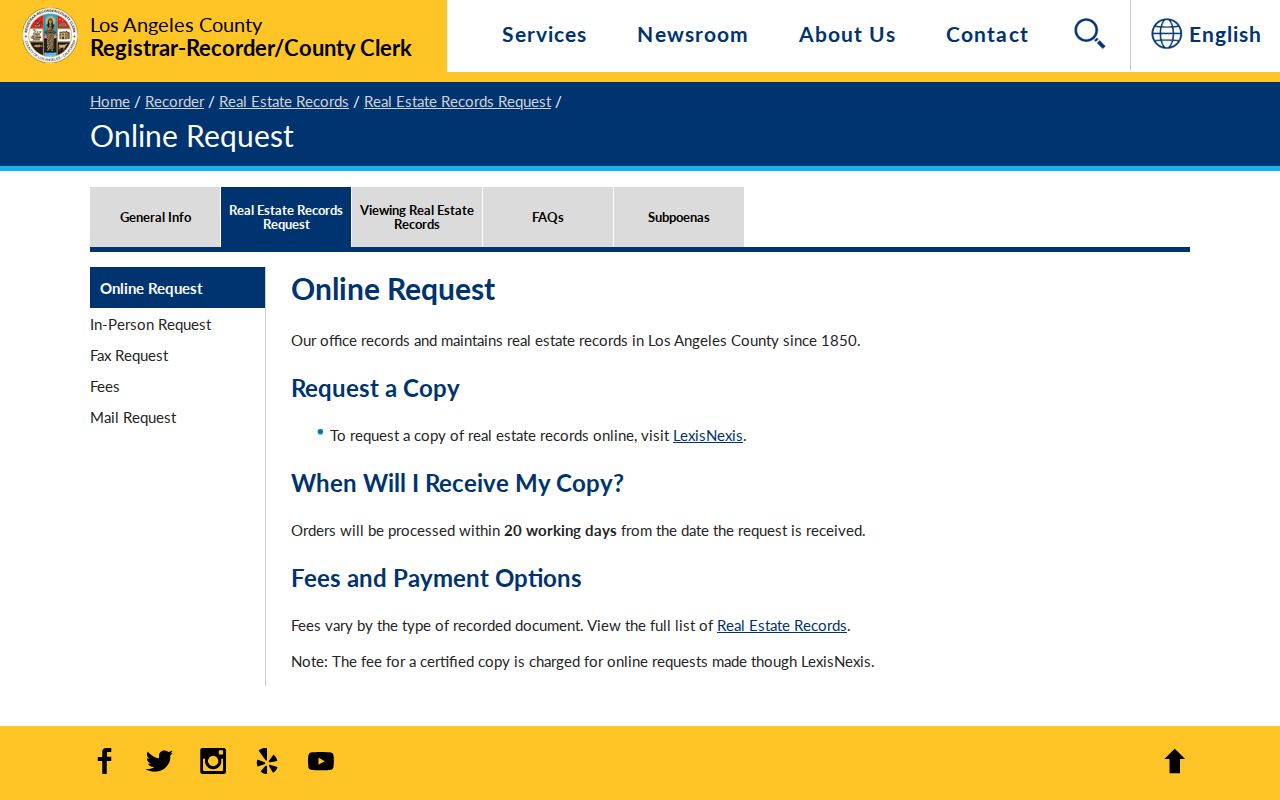
This is a copy order, not an address search. Read any deed against the AIN and legal description before trusting its names.
Norwalk Checks for Bell Gardens Previous Residents
The deed trail lives in Norwalk. The office sits at 12400 Imperial Highway, Room 2207. Counter hours run Monday through Friday, 8 a.m. to 5 p.m. Appointments open up to two weeks ahead. Norwalk instructions place 1851-1957 material on the lower level and 1958-present material on the second floor, while another county page describes the archive as 1850-present.
Mail is an option. Send RR/CC Real Estate Records, P.O. Box 1130, Norwalk, CA 90651-1130, with document type, names, and the recording year or years. Checks or money orders are accepted, with processing stated within 20 working days. Fax requests go to (562) 864-1250 and add return address, delivery choice, daytime phone, and card details. No telephone orders are taken, and the online route is a contractor order rather than a free public index.
Fees are per page. Plain copies cost $5 for the first page and $3 for each additional page. Certified copies run $6 for the first page and $3 after that. The full document must be purchased. These are copy charges, not recording fees. The Los Angeles County recorder search guidance confirms the name-and-year search limits behind the Norwalk visit.
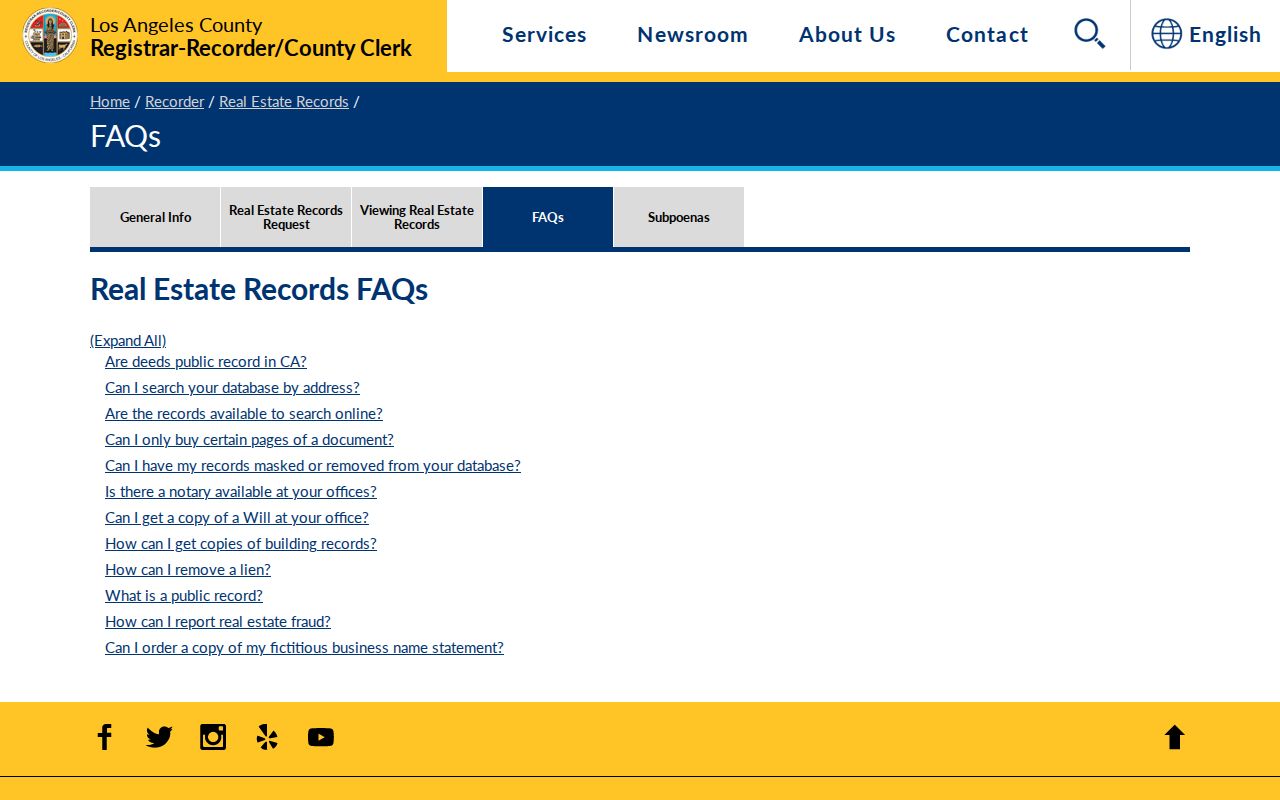
The guidance draws a useful line. It separates ordering a known instrument from the slower work of reconstructing previous residents through annual indexes.
Bell Gardens Past Households in Print
Owners tell only half the story. A criss-cross directory can also link a street address to a printed occupant. The LAPL digitized City and Street Directories selection spans 1875 to 1987. It is regional, though. A Los Angeles volume does not guarantee a Bell Gardens entry. The collection's house-history guide traces occupants in Los Angeles city directories from 1873 to 1942 and recommends census, street-name, probate, and genealogy sources. Bell Gardens sat outside Los Angeles city until 1961. Check each volume's geography, then see the Bell Gardens city directory section for the wider shelf context.
Match a 1940 directory clue with the 1940 census. Pair a 1950 clue the same way. A directory is a dated publication, while a census captures the household on one set date. Schedules are open through 1950. The 1960 count arrives in 2032. Neither source proves a deed transfer or every person at an address.
- Check title, copyright, publisher, geography, and abbreviation pages.
- Search address and surname; capture the printed name and page citation.
- Pair the 1940 or 1950 result with the matching census enumeration.
- Compare adjacent years for a move, death, address change, or new household.
- Keep directory and census findings separate from deed evidence and record gaps.
Start federal census research with the National Archives genealogy catalog. It supplies pages when a library database does not.
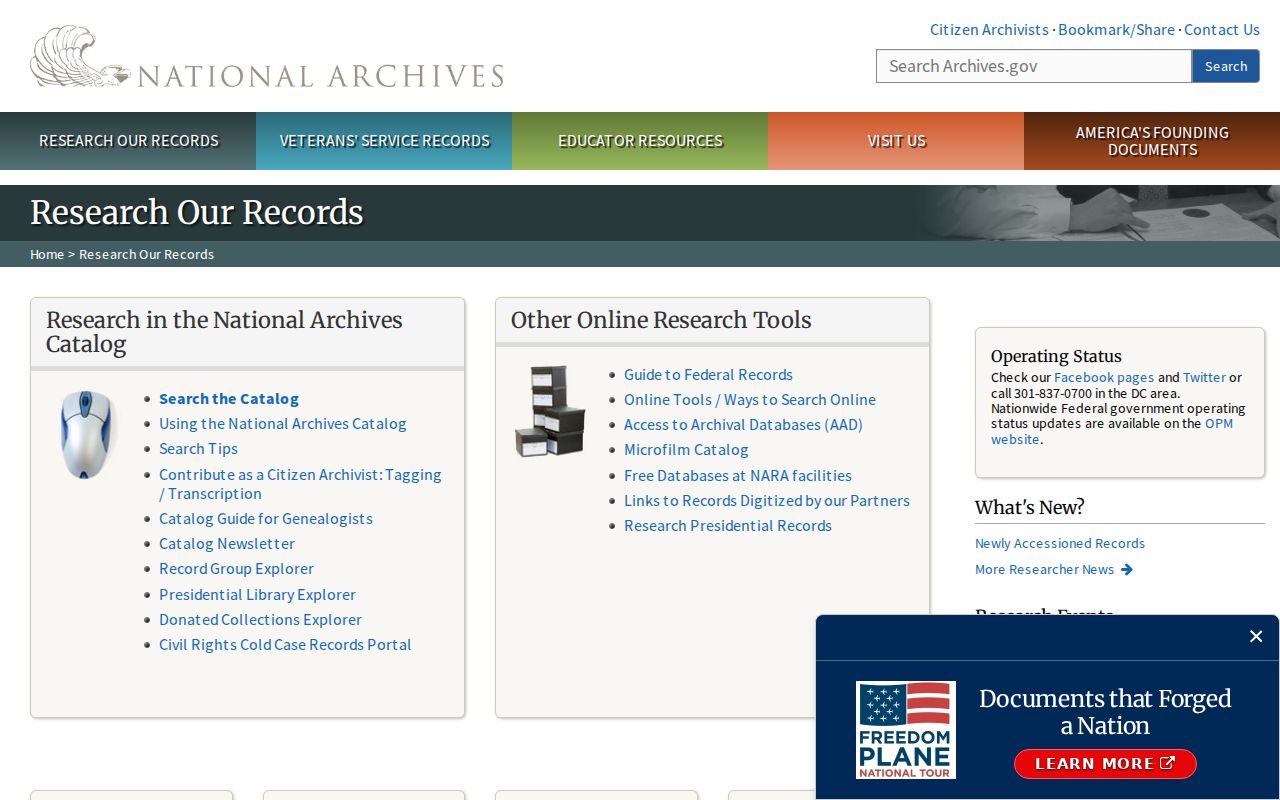
The archive route also confirms the census year and place label. That matters for pre-1961 records, which may use county or ranch geography instead of Bell Gardens.
Library Clues for Bell Gardens Previous Residents
Start with the Bell Gardens Library, located at 7110 S. Garfield Avenue. Staff answer questions in person or by phone at (562) 927-1309, and Spanish-language materials, newspapers, copying, and public computers are all available. Hours run Tuesday and Wednesday noon to 8 p.m. and Thursday through Saturday 10 a.m. to 6 p.m. Ask directly about obituaries, notices, and old directory volumes, since those materials often surface through a conversation rather than a catalog. The library maintains no authoritative online obituary index for Bell Gardens. No exact printed directory run is confirmed either, so treat the branch as a starting point rather than a guaranteed archive.
For deeper history, LA County Library's Californiana collection sits in Norwalk behind closed stacks. It holds more than 24,000 books plus over 200 periodical and newspaper titles. California census schedules from 1850 through 1910 are there, alongside the Alta California, the Los Angeles Star, nineteenth-century directories, and official county histories. Request material for Bell Gardens, Bell, Cudahy, and southeast Los Angeles County. Ask also about Polk volumes, Haines criss-cross directories, Pacific Telephone books, and school yearbooks. Nothing guarantees a run survives for this city.
One caution applies to institution names. The branch moved from Live Oak in 1938 to Eastern in 1958, then to Garfield in 1970. A label can hide a completely different collection context.
Date Bell Gardens Homes With Local Records
A permit dates a physical change without naming every resident. Bell Gardens Building and Safety covers construction, alteration, repair, improvement, and demolition. It also covers most plumbing, electrical, and mechanical work. Its permit information page lists plan-check intake Monday through Thursday, 7:30 to 11 a.m. It also lists inspections 9:30 a.m. to 6 p.m. Plan checks expire after six months. One timely extension costs a 25% fee. Citizenserve may lack older history. If so, request a narrow address record from the City Clerk.
Bell Gardens Planning handles subdivisions, parcel and tract maps, mergers, plan amendments, zone changes, variances, conditional uses, and site plans. Code Enforcement offers no public case lookup, and requests may meet privacy exemptions. These files show permit address, scope, dates, applicants, or contractors, not a household roll.
Assessor aerials cover 2008, 2011, 2014, 2017, 2020, 2023, and selected 2024/25. Compare visible changes with permits, planning files, and deeds. The Library of Congress Sanborn maps show footprint or use only if a Bell Gardens sheet exists. Check whether a sheet and year appear there.
Gage Mansion and Bell Gardens Land Trail
Land history can place past residents before modern street labels existed. Los Angeles County dates to statehood in 1850. Bell Gardens became a city on August 1, 1961. Earlier records may use county, ranch, precinct, or neighboring-place names. Rancho San Antonio and the Lugo family shaped the first trail. The adobe at the Gage Mansion site was built in 1795. Gage Mansion at 7000 Gage Avenue preserves that land story through Henry Gage's alterations. It became California Historical Landmark No. 984 in 1991.
The landmark is context, not proof. Not every Bell Gardens address connects to Gage. Ranch land later divided among several cities. These include Bell Gardens, Bell, Maywood, Vernon, Huntington Park, Walnut Park, Cudahy, South Gate, Lynwood, and Commerce. Test older names against the parcel map and deed description.
Gaps in Bell Gardens Previous Residents
Probate and obituaries can close a trail when a prior owner died or left an estate. The Los Angeles Superior Court probate index reaches 1983 to the present online. The Archives and Records Center holds older material, mostly 1910 to 2004, in paper, microfilm, or image form. Search the decedent first. Then inspect public petitions, notices, orders, fiduciaries, and heirs. Newspapers may add kinship or former-address clues. Relationships still need filed or certified support. The LA Court Archives and Records Center page marks the archive route for older probate and court material.
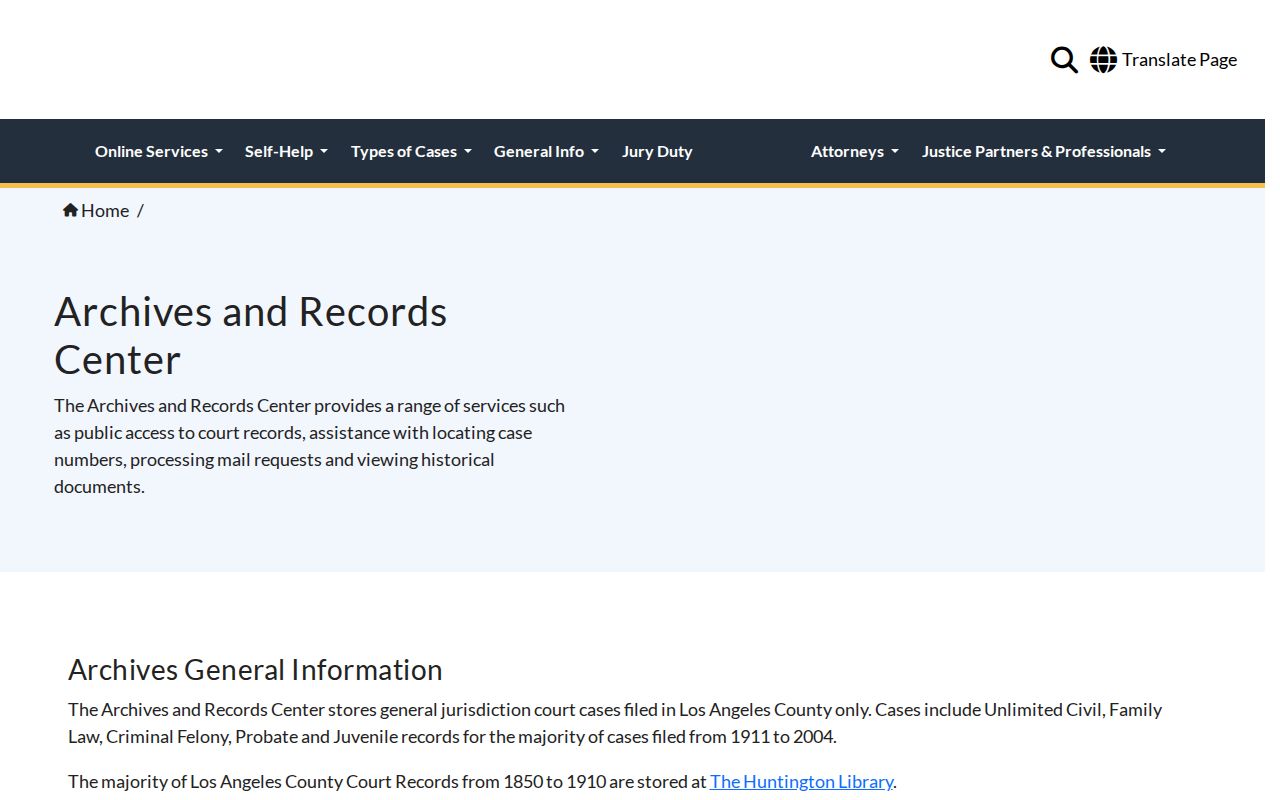
The archive path helps when an online name result is narrow. Courthouse terminals can be free. Paid party-name and image options vary by case type. Record the index, the date range, and the archive checked for each search.
Several gaps remain. The city publishes no record of an official Bell Gardens street-renumbering event. No Bell Gardens Sanborn sheet or year is established. The LAPL house-history guide is Los Angeles city oriented, with no dedicated Bell Gardens counterpart, and local directory, reverse-directory, telephone-book, obituary, and yearbook runs remain unknown. Compare tract maps, directory scope, historic maps, and legal descriptions before treating a missing address as a missing household.
Lawful house history. Use deed, directory, census, probate, and map evidence for family history, research into a property, or personal curiosity. Do not use a trail to harass, threaten, or track a living person, and respect protected addresses and sealed records.